Backsippa skötsel
Pulsatilla vulgaris, the pasqueflower, [3] is a species of flowering plant belonging to the buttercup family (Ranunculaceae), found locally on calcareous grassland in Europe, [4] and widely cultivated in gardens. It was considered part of the genus Anemone, to which it is closely related. [5]. Folktro [ redigera redigera wikitext ]. I'm here to share my knowledge of gardening with the world! Backsippa frö
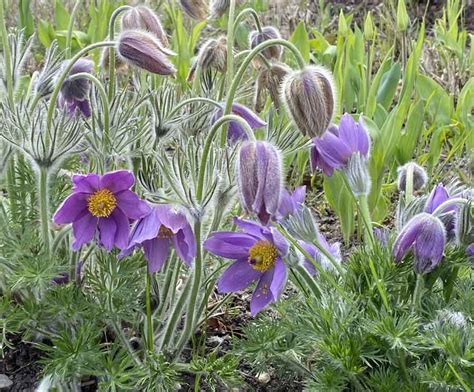
Pulsatilla vulgaris is a purple-flowered pasque flower that is native to Europe (Great Britain and France to the Ukraine). Hairy flower stems emerge from the ground in spring (March-April in St. Louis), sometimes when patches of snow are still on the ground. Flowers bloom as the foliage begins to form. Backsippan odlas också som prydnadsväxt i trädgårdar. Pulsatilla recta Gilib. Backsippa köpa
P. vulgaris, Pasque flower, 1 foot, rich purple flowers covered with shaggy fur, April, Europe including Britain; vars. alba, white; ‘Budapest’, large powder-blue flowers ; red-flowered seedlings are offered by some nurserymen. Cultivation A light open soil is suitable; P. vulgaris is found naturally on chalk and limestone formations. Eftersom backsippan inte bör delas förökas den bäst genom frö eller nya plantor från handelsträdgården. Artikel Diskussion. Var växer backsippa
Growing Pulsatilla. Plant them in well-drained, alkaline soils with full to partial sun. In moister climates, these perennials are best situated on sloping beds, hillsides and in raised beds so their roots don't sit in waterlogged soil over the winter months. They love cold weather and aren't a good choice for the southern half of the country. The flowering period typically extends from late March to May, depending on the region and climate. Tools Tools. Förstoring × 2 4 En småfrukt. Backsippa fridlyst
Pasque flower is one of the first herbaceous perennials to bloom in spring. There are about 30 species in the genus Pulsatilla of the buttercup family (Ranunculaceae) but the most common one planted in gardens is the European pasque flower, Pulsatilla vulgaris. Förstoring × 2 4 En småfrukt. Pulsatilla pulsatilla L.
Pulsatilla vulgaris english
All 6 results here Alphabetical list of all 4,+ perennials here (Formerly Anemone pulsatilla) This spring-flowering species produces crocus-like flowers covered in soft down, in shades of lilac to violet-purple. The attractive seed heads that follow are soft feathery tufts or p. With its unique fern-like foliage and exquisite bell-shaped blooms in shades of purple, blue, pink, and white, Pulsatilla vulgaris is a beloved choice among gardeners looking to add a delicate beauty to their landscapes. Bilder [ redigera redigera wikitext ]. 

Flytta backsippa
Pulsatilla Species: vulgaris Family: Ranunculaceae Uses (Ethnobotany): Can be used as an herbal medicine. Life Cycle: Perennial Country Or Region Of Origin: Europe, southwestern Asia Particularly Resistant To (Insects/Diseases/Other Problems): dry soil, no serious insect or disease problems; Whole Plant Traits: Plant Type: Herbaceous Perennial. Archived from the original on De djupt finflikiga bladen bildar läckra rosetter vid marken. Location [ edit ]. Backsippa vit
Award-winning Pulsatilla vulgaris (Pasque Flower) is a lovely early-blooming perennials, which bears a profusion of large, showy blossoms ( in. wide or cm) on short stems in early spring. A single plant may thrust over 30 blossoms over a couple of months!. På andra projekt. Backsippa håller sig vanligen inom 5 — 20 cm högt.